Find Your “Third Place” at the Library

Boston Athenaeum

At a recent conference, a colleague of mine from the Midwest mentioned in passing that she likes to work off-site. This also appeals to me, and I have been wanting to build more remote work into my life. She told me that she works a few times a month in a coffee shop or in a dedicated co-working space in a nearby city. These off-site locations are her “third place” – not home, not work, but a place with a different feel, a sense of community and place to gather and exchange ideas.

Dedicated co-working spaces are a growing opportunity for remote workers who find that coffee shops or their homes don’t always fit their needs. This appears to be a more accessible option in larger cities. I haven’t found any spaces in the Boston area that offer drop-in or day passes, but the one my Midwestern colleague uses has a $20 day pass. What a great opportunity – I hope that business model moves east soon. Hotel lobbies are increasingly becoming areas where remote workers congregate. Many hotels are encouraging this activity, presumably to make the lobby area feel energized and hip. This is a great option if you work in or near a large city – I’m not sure the motel down the street offers the same vibe.

Another colleague often works at a local college library. It helps that he is an alum, but it turns out that many local colleges and universities welcome guests to use their libraries. The summer is a great time for reflection and tackling those larger projects requiring research and planning. Summer is also a time when college campuses are quieter, with few distractions. My colleague says that just walking through campus to a stately library makes him feel studious and purposeful – what better frame of mind to tackle a complex writing project? This version of remote working makes the most sense for us as local government leaders. At the college library, we aren’t in charge! We’re practically anonymous.

It turns out that local libraries are becoming the third place for many remote workers. Many large urban libraries are creating dedicated co-working spaces with access to collaboration areas, work tables, and technology. If smaller suburban libraries can’t quite make that happen, they are places that are generally quiet and free from distraction. And yet, they also provide us with a sense of community, which can make us feel less isolated and more effective in our work. The blog Workfrom – dedicated to connecting remote workers to welcoming work spaces – cites the research of Dr. Kate Stewart, who says that people feel safe in libraries, and that makes a big difference in their ability to concentrate. “Libraries don’t occur to people as cowork spaces but they naturally lend themselves to a quiet environment free of visual distractions” she says.

I have tried to work in my local library and in coffee shops, with little to show for it. In my local library, even though I can hide, I spend a lot of time talking to residents. I go to the library several times per week, and I love the opportunity to talk to patrons, so I never feel right about hiding. I also associate our library with reading. When I try to get work done, I am drawn to browsing the stacks. The local library isn’t a great place for me to get work done because I am in charge. I think about the heat. Or the lack of heat. Or any other maintenance or staffing issue that may be on-going. I’m thinking of trying one of the many lovely local libraries in surrounding towns as an alternative!

I simply cannot work by myself in a coffee shop. There are too many people and too many conversations. And, even though my “kids” are adults, my head swivels whenever a toddler yells “MOM!” I do my best remote work at the Boston Athenaeum – a small and stunningly beautiful private library across from the State House. I do pay an annual fee for this membership, but it is the perfect place to while away an hour between meetings in Boston. I try to schedule an entire day at least once per quarter (hopefully more often in the year to come). The grandeur of this space does for me what the college library does for my colleague – puts me in the studious and purposeful mindset needed for productive work.

You don’t need to be an entrepreneur or a freelancer to benefit from remote work on occasion. Have you tried working at your local library? There may be toddlers, but they have their own room! You won’t have to feel guilty about buying more coffee. The bathrooms won’t require a key with a big spoon chained to it. And best of all? The library is full of librarians.

How about you? Do you work remotely? Where? We’d love to hear your tips! Let’s practice.

What would you tell your early career self?

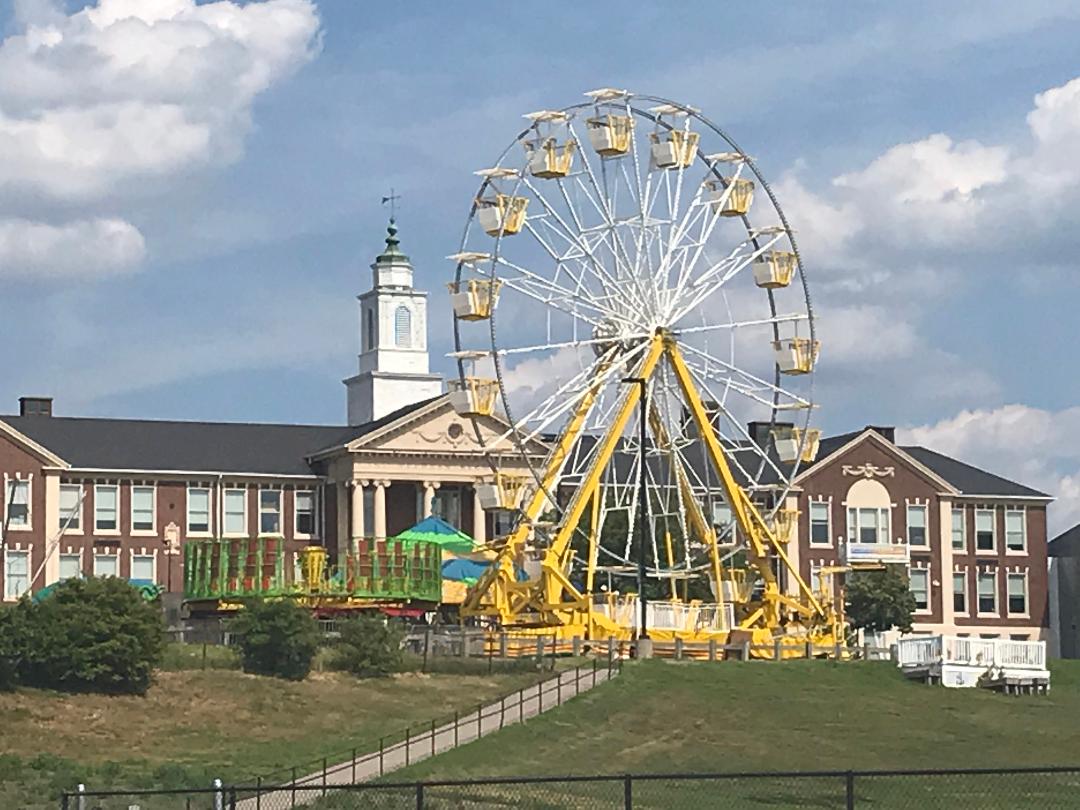
Summer carnival at Needham High School 2019

When I asked my community what they would tell their early career selves, and what they wished they had known when they started out, the responses ranged from humorous, to practical, to wistful. This month we are grieving the loss of recently retired manager Rocco Longo who served in numerous communities for more than three decades. Rocco was the manager who practically everyone I know would turn to for advice. Since Rocco was one of the very first managers to complete my (rather lengthy) “Somehow I Managed” survey, I wanted to go back and see how he would answer this question, and whether his answers would follow the common themes. They certainly did.

Rocco told me that he was lucky from the start – he always liked what he was doing for work. He wished he had understood the personal nature of attacks on local government officials, and the toll that living in the community where you work can take on your family, especially your kids. He grew to realize that living in the community you serve is not mandatory. He wished he had taken writing courses in his early years. (This is a great idea – I’m going to look into this even for us seasoned managers). He summed up with a sentiment that I have heard from many managers now entering retirement: “I think as a baby boomer, the profession itself was growing, so a lot of what was going on was learning on the job, and that was part of the enjoyment.” In other words, maybe the best advice we can give our early career selves is that there is just no substitute for experience, and make sure you enjoy the ride while you are gaining it.

As with Rocco, “don’t take things so personally” was the universal advice of survey respondents. Others wished they had truly understood and planned for just how unsettling the night meetings are. The impact of the workload on family was also a common theme: “A community never rests, and sometimes those closest to us feel the greatest burden.” And, “Life at the top is lonely. While it is nice to be part of a team, the coach has a distinctly different job to do, and he or she is the only one doing it.”

Many managers remarked that they wished thy had had more confidence in their early career abilities. One colleague noted “Don’t hold back. You can do what you see the senior managers doing. They are not bigger than life.” I can recall watching the “big kids” when I started out, and yet now that I am arguably one of them, I find that I learn the best new approaches from those who are just starting out. Managers also wish they had understood early the power of community: “I would have been less nervous about embarking on this career if I really knew the extent of the support out there for municipal managers.” Another colleague said that he wished he had more confidence, had been willing to take risks and put himself “out there.” On the other hand, other managers noted that the career is a marathon not a sprint, and urged their younger selves not to rush so fast to get to the manager seat. Here is some timeless advice for women just starting out: “As a woman in local government, standing up for yourself is nothing to apologize for.”

The question of colleagues versus confidants is a regular part of our Boot Camp for new and aspiring managers. Managers need to be keenly aware that there are very few, if any, confidants in their organizations once they are in the top job. Confusing colleagues for confidants is a mistake many managers make, often the hard way. Said one manager, “Get to know your staff members but do not get too close. You will never truly be their friend, you will always be the boss.” Another manager offered this practical advice: “As far as having the technical knowledge will allow you to figure out what needs to be done, having the people skills will allow you to actually accomplish something.”

What would you tell your early career self? My favorite advice from the survey: “Don’t panic.” “Dress better.” “You’re an idiot.” Let our community know your best advice by leaving a comment! Let’s practice.

What Are Your Values – and How Do You Know?

Needham Accessible Reservoir Trail (NART)

In 2015, after evaluating the results of an employee satisfaction survey, our Town embarked on a formal employee engagement process. The focus areas of the program have ranged from the lofty: ensuring that every employee’s on-boarding experience is of the highest quality – to the more mundane: improving the dreaded travel reimbursement process. Our engagement strategies have evolved over the years depending on circumstances and the interests of the folks participating. In one recent iteration, we held a series of workshops culminating in a Town-wide vote on the description of our core values: Communication, Integrity, and Community.

Since the early days of the employee survey (memo to me: don’t implement employee surveys during the snowiest one-month period in recorded memory when employees are exhausted), the topic of communication has been the overriding theme. It goes without saying that integrity is the backbone of local government, and community is both what we are, and what we do. Once we identified the words, we began to wrestle with what to do with them.

Enter Bob Glazer, author and CEO of Acceleration Partners who was written up in the Boston Globe Magazine for his innovative approach to connecting with an all-remote workforce through an inspirational weekly email now called “Friday Forward.” I had never meet Bob, but the article said that he lived and worked in our town so I stalked him tracked him down and invited him to speak to our leadership team. He graciously accepted.

While affiliate marketing and local government are fairly different “mission-wise,” we do share the commonality that not all of our employees get to connect every day. Or, in some cases, ever. Given the traditional business week followed in many departments, and the 24/7 schedule in others, many employees never interact in person. Bob stressed the importance of connection through shared values. He challenged us to consider our core values, and how they are “operationalized” in our culture. In other words, if the Town’s core values exist only on stationery, how do employees and the public know if the values are being honored?

So challenged, our solutions team stepped right up. We had already identified the values – how hard could the next step be? Pretty hard, as it turns out. Brené Brown, in her latest book Dare to Lead, notes that organizational values are often “gauzy” – assessed in terms of aspirations rather than actual behaviors that can be taught, measured and evaluated. Our team reviewed the process outlined in her handy reference guide and got to work. The basic question for us was how to articulate what the value of communication might look like on a job description or performance review. If communication is our core value, how will we know if we are doing it right?

We organized an operationalizing values workshop with volunteers from our wider leadership team. Using the tools outlined in the guide, we separated into groups and brainstormed statements that all begin with “I” or “We.” The goal was to identify behaviors that support the value of communication. The responses that we received were categorized into the general groupings of teamwork, information sharing, empowerment, respect, and protocol.

Teamwork behaviors include statements like “I ask others with more knowledge to help me” and “I make sure that everyone who should be involved in a conversation is invited.” Information sharing behaviors include statements such as “I think of creative ways to get our message out” and “I provide clear and accurate information. ” For empowerment, participants suggested “I am empowered to ask questions” or “I take responsibility for asking for what I need, ” while the category of Respect led to “I am mindful of other people’s time,” and “I own up to my mistakes.” Finally, protocol statements sounded like “I will not reply all unless absolutely required” (this again!) and “I take the time to proofread email before sending.”

It became clear to us that the simple word “communication” may be too “gauzy” to adequately articulate our core value, and we will be meeting again soon to keep wordsmithing until we get it right. Then, it’s on to integrity and community. We found Bob Glazer just at the right time in our process, and we are forever grateful!

How about you? Has your organization identified its core values? Have you found interesting and creative ways to operationalize them? Please share! Let’s practice.

Why Does Going on Vacation Show up on the Local Government Miseries List?

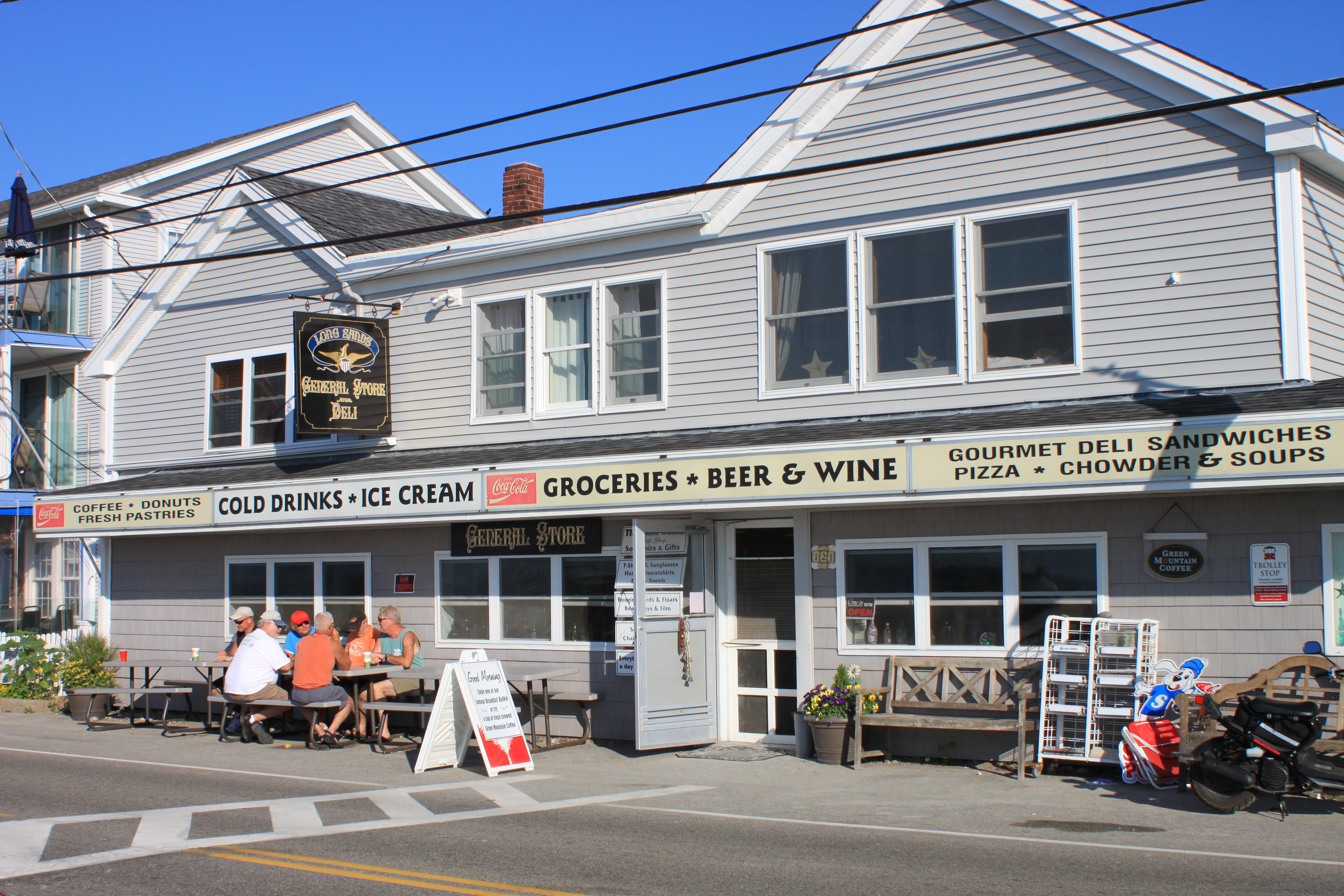
Long Sands General Store

You know that exercise that seems to come up at every training session? “Close your eyes and imagine yourself in your happy place.” For me, that place is Long Sands Beach in York, Maine. Well, it’s my local happy place (looking at you Amalfi Coast).

When my eyes are closed, I hear the surf. But more importantly, I hear the gentle slam of the old fashioned wooden screen door at the General Store. And I know when I open it Erica will be there with a smile and a welcome back. Heaven.

Long Sands Beach, York Maine

In April, I made a presentation to the department managers in a very small community near mine. These managers were the first to provide me with feedback on my list of 21 (and growing) local government miseries. I was quite surprised that they overwhelmingly resonated with the vacation misery.

You know the one. It takes 40 hours extra effort before and after a vacation just to get ahead/stay caught up. Many note that sometimes it’s just not worth it to get away. We have to do something about this.

I asked my colleagues for their advice. The most common response was to plan a vacation of more than two weeks – many feel that one week is simply too short to unplug. Vacationing in remote parts of the world with no cell service was a close second. One colleague described his strategy of “gently touching” email every day. Perhaps early in the morning, when no one else is awake, or late afternoon when most offices are closed. I keep picturing him hovering over his keyboard and oh so very gently opening an email. Just the thought of it makes me smile, and maybe the image will put me in the best frame of mind to check email on my vacation – keeping the important things moving along, and ignoring the rest.

Enough books for a week’s beach vacation

How about you? Do you have a tip to prevent the vacation dread response? Does anyone believe your out of office reply that you have “limited access to email while away?!”

Emily P. Freeman says that “rest is sitting down on the inside.” So let’s practice, lobster roll in hand.

Don’t Throw That Phone Across the Room: Dread Prevention 101

It’s finally spring in New England, so thoughts naturally turn to dread. That is how to limit or even eliminate it.

You know the kind I mean.  A text message flashes up on your phone.  You open your inbox.  Someone sends you a calendar invitation on Outlook.  Immediately your stomach sinks.  Your face flushes, your heart speeds up.  You groan.   You think about but (usually) do not throw your phone across the room. 

In some seasons of the year and of life, this reaction happens with greater frequency.  Last year, when I succumbed to dread with alarming regularity, I set out to discover why I was feeling that way, and whether there was anything I could do about it. 

I quickly realized that the situation called for an old fashioned “naming and framing” exercise.  In order to reduce the level of dread, I needed to have a better handle on what was really causing it.  I thought it was possible that information would allow me to re-frame some of the dread-inducing situations, or even better, stop them altogether by planning more intentionally.

I’d like to tell you I created spreadsheets, charts, graphs, and Venn diagrams but those who know me would quickly cry foul.  What I did do was grab a yellow pad of paper and a pen and started a list.  I labeled the columns with the mode of communication, the reason for the communication, the sender, and a response options.

I decided to focus on email and texts – tackling dread inducing meetings will have to be a second step.  I determined that most of the dread came from the following situations:

It’s not clear why I received this email.  The sender did not follow our protocol of carefully arranging recipients by “to” and “cc” so that those copied would know that they are just being kept in the loop, and need not take any action.  This email creates extra work for me, since I must email the sender back to ascertain what he or she needs me to do.  In the way of all things email, this usually requires two or three emails back and forth and even more annoyance.  A quick way to lower the level of frustration in this case is to actually pick up the phone (I know).  A 30 second call will establish roles and responsibilities, and you can use the opportunity to beg the person to follow the agreed upon email protocol. 

There is something I should have done and did not do.  We’ve all been there.  You have to send a complicated and nuanced email but keep putting it off until it is too late.  You didn’t write the material that you promised to finish weeks ago.  You didn’t get the buy-in you needed for a project to succeed because the stakeholders were just too needy.  And now you are being called out on it.  Without question, the best strategy for preventing such failures is to ensure that they don’t happen in the first place.  We use a method we call Step Zero to help us act in a more thoughtful way.  Most importantly, when I catch myself procrastinating, I remember the pain of the last failure and try to act accordingly.

There is something the sender should have done and did not do.  You have been asking for data for weeks.  All you wanted was for that person to follow-up with a resident to let her know when her tree limb would be cut down.  Someone is letting you down. Again.  I do a lot of coaching on this issue – trying to encourage managers to delegate to staff in the office who can easily call residents to keep them updated about schedules.  More recently, though, I’ve been working on coaching myself.  Is the manager overloaded?  How much have I contributed to the overload?  Is there a way we can agree on how to triage the sheer volume of inquiries that the local government manager receives, but must rely on staff to answer?  A little soul searching is in order for this one. 

I know you’re busy, but can you review this 30-page grant today because it is due at 5:00?  The easy answer to this one, of course, would be to say no, my time is valuable, and “A lack of planning on your part doesn’t constitute an emergency on mine.”  But we all know that as the head of our organizations, everyone’s emergency is actually our emergency.  It the grant doesn’t go in, and a segment of our community is negatively impacted, blaming someone who works for us isn’t really an option.  I am working on setting up what we used to call a “tickler file” (does anyone still say that?)  listing due dates that I know about.  It may help me work with managers to prioritize the requests that I send them if I can clearly see the deadlines on their schedules.    

I can’t fix your problem.  I know that you are absolutely correct and frustrated.  I know that you pay a lot of money in taxes (really, I do).  And there is no way for me to quickly or legally help you.  So what can I do?  I remember that many people just want to be heard.  I try to take the time to hear them out and explain why what they are asking for is not possible.  Perhaps it may be possible in the future with more study or process.  Perhaps there is an alternative that might work.  I tell myself to try to say yes to something. 

Some people just push our buttons.  I find it useful to have a small cache of mantras to drag out when these emails come through – even before I read them.  The VeryKate version is something along the lines of “Remember that all she wants is to be safe, happy and healthy just like you do.”  A more common mantra might be “I will do everything in my power to outlast you in this organization” or something even less charitable.  We all have work to do.

Reply All.  Enough said.

When the dread wave starts, this naming and framing exercise has helped lower my dread quotient.  A little. Sort of.  But I’ll take it. 

I’d love to hear what triggers your dread reaction.  What steps have you taken to try to lessen the reaction?  Let’s practice!

Somehow I Managed

†††

Chatham Bars Inn

Last week, I had the amazing opportunity to work with Bob O’Neill (former executive director of the ICMA), presenting a workshop for the Massachusetts Municipal Managers Association on Cape Cod. My role was to share findings from my research on life as a local government manager. We spent time as a group learning and brainstorming about how to stay motivated in this profession.

The managers I surveyed in my research had a wide variety of suggestions for maintaining motivation at work – making sure to look at the big picture, using humor, changing communities, embarking on passion projects that do not need any outside approval, making routine things better or more innovative, and spending time mentoring staff.

Several managers noted that when they felt that they were losing their motivation, they switched communities to make a fresh start. One manager said that he stayed motivated by learning new ways to present the budget, or setting a new goal such as applying for the GFOA distinguished budget award. Another manager noted that “It is helpful to look at every recurring project with an eye for how to make it better.”

Having passion projects is a common strategy. “Undertaking a pet project helps break the monotony in the municipal cycle” said one manager. Another agreed: “I try to have a signature project each year that isn’t Town Meeting dependent to revitalize my primary purpose for doing this work – making life better for the citizens I serve.” Another manager took the “CSI” approach: “Take on a ‘cold case’ issue and try it again if enough time has passed,” he suggested. Continuing on the “cold” theme, a colleague knew where to look for his next passion project: “There are many projects in the freezer – that’s when you don’t have enough room to put them on the back of the stove.”

When you have been in the same position or career for a long time, it can be tricky to find ways to learn and grow. Attending professional development workshops is an obvious way to stay motivated. Another is to become a subject matter expert. One colleague who moved to a coastal community prone to flooding decided early on (I think on day two when the first winter storm hit) that becoming an expert in emergency management would be a necessity as well as an opportunity for her. Taking on new departments to supervise, and changing reporting relationships in your organization can be a way to learn new skills. One manager agreed to take over supervision of the IT department with no first-hand knowledge of the subject matter as a way to keep work interesting.

Scanning the landscape to identify signature issues on the horizon that need to be reckoned with was the strategy of one local manager. In that vein, I recently listened to a podcast (Gov Love of course) about the future of parking garages when autonomous vehicles are common (sorry behemoth concrete structures, you will need to be re-purposed). I keep thinking how the landscape in our town will change as a result, and that we better start planning.

Connecting with peers and fostering long-term relationships is an exceptional way to stay motivated and resilient. Participation in the ICMA and state associations is a common way to do this. One colleague noted that “I feel like the camaraderie of the membership along with the professional resources that are provided make both organizations (MMMA and ICMA) exceptionally valuable.” (Is it me, or is camaraderie the hardest word to remember how to spell?)

I’m sure many local government professionals will identify with this manager, who says “My involvement with MMMA has been a highlight of my life. The things I learned helped me to do a better job. The friends I made supported me through some dark times when I needed it most. I tried to return that in kind.” Many said that their colleagues were some of the closest friends they had, and that attendance at association meetings is critical to nurturing those relationships. Finally, any number of colleagues have created kitchen cabinets, with whom then learn, grow, commiserate, celebrate and grieve. Said one manager: ” I have a small group of colleagues, all of us entered the profession at about the same time. I consider them to be my personal board of directors.”

This “Somehow I Managed” research, and this blog, are my passion projects. The work keeps me engaged and connected with peers – a big source of motivation for me. I urge you to explore new strategies to boost your resilience and stay motivated at work. If all else fails, plan a great vacation for a time when you reach a big milestone – the end of Town Meeting or the adoption of the city budget for example. Having something to look forward to is a great way to endure the seemingly endless number of meetings about stormwater!

If you would like to fill out the survey send me a note! I would love to hear your stories and keep the project moving. And Bob, how about we take our show on the road?!

Let’s practice.

A Local Government Legacy is…

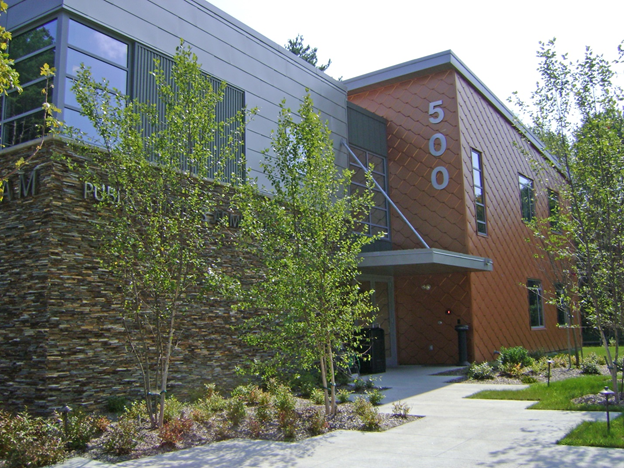
Public Services Administration Building circa 2010

One of the greatest joys for me as a local government manager is that my legacy lives right here with me every day. Anyone who has managed a city or town has had a hand in the construction or reconstruction of capital facilities, and nothing compares to the feeling of satisfaction when you get to see them every day. Over the last ten years, I have been part of many such projects, and I count them as my proudest accomplishments.

About a decade ago, our town was planning for the historic renovation of its 1902 Town Hall. It had been retrofit in the 1950’s with terrible dropped ceilings and partitions. Some wanted to maximize its use for municipal offices, and others wanted the great hall (the entire second floor) restored as a meeting and performance venue. Although I admit I was skeptical about the latter approach, it was a clear community desire. So we used that opportunity to pitch a second municipal building – one that would house Public Works administration (then located above a garage) as well as permanently displaced Town Hall departments. The new building also served as swing space for our renovated Town Hall – saving millions in relocation costs. I will never forget the moment we stopped saying if we could build the Public Services Administration Building, but how we would pay for it.

Center At the Heights

Our Town’s senior center was located in the basement (truly) of an old school building re-purposed as senior housing. For more than a decade, citizen committees explored options for creating new and appropriate space to provide services to our growing senior population. As a fully-developed and land-locked community, the options were scarce and unappealing. After several missteps, we came up with a wild idea – to pitch the Commonwealth to let us build the center in a poorly utilized commuter parking lot. We were able to trade a town parking lot already used for commuter parking to the transit authority to increase its parking revenue, and the deal was made. Turning this improbable idea into reality is an example of why we do this work. The Center at the Heights runs at capacity every day.

Owens Poultry Farm 2015

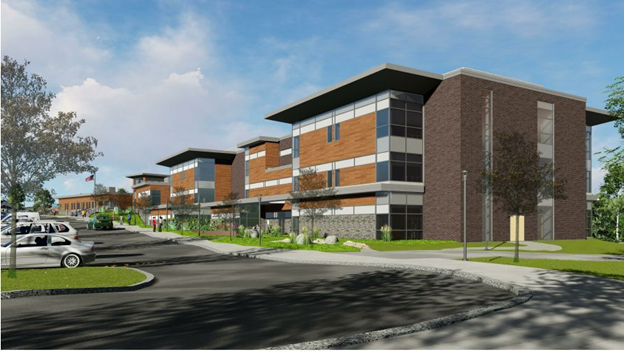
One of our elected officials called me out of the blue and told me that our town’s iconic poultry farm was to be offered for sale. At the same time, we were wrestling with a series of options for reconstructing an elementary school and none was satisfactory. So we said “Let’s build the school on the poultry farm! We can also buy a handful of houses around it!” It sounds unbelievable but that’s just what happened. The new Sunita L. Williams school will open this fall. Every time I drive by the school I am proud of having been part of the behind the scenes planning.

This image has an empty alt attribute; its file name is image-3.png
Rendering of the Sunita Williams School

There are always lessons learned. Since we built the Center at the Heights, commuter rail use is way up, so we are on the hunt again for more space for parking. The Sunita Williams School is the only project I have been involved with that included hazmat remediation of chicken fat. And, of course, there were a lot of “buying the farm” jokes to put up with. With respect to Town Hall, though, the preservationists had it right. The hall is in great demand for concerts, fundraisers, and meetings. And, since 2011 when it reopened, we have held our Town Meeting in the great hall. Using the hall for Town Meeting is more convenient, and much more intimate than the former venue – an elementary school auditorium.

Needham Town Hall 1902/2011

“Old buildings are like old friends. They reassure people in times of rapid change. They encourage people to dream about their cities – to think before they build, to consider alternatives before they tear down.” – Nancy Harris

What’s your legacy building? I’d love to hear about it. Let’s practice!

Why Very Kate, and What They Don’t Tell You About Blarney Castle

I’m not very good at heights.  Or enclosed spaces.  Or the dark. When people tell me stories about vacations hiking in caves or scuba diving into enclosed underwater rooms, I usually plug my ears and hum. 

Here’s what the guidebook doesn’t tell you about the treasured landmark Blarney Castle: it’s not for the faint of heart.  I never planned to do the whole “lean over the abyss on my back to kiss a stone” thing, but I never expected the ascension to the top of the castle to be so dark.  And enclosed.  The higher you climb, the darker and more enclosed it gets.  And, since you are in line behind people taking turns doing the aforementioned awkward kissing maneuver, the line moves slowly.  Very slowly.  It’s like something out of a horror movie for people like me.

When my family and I climbed the stairs to the top of Blarney Castle a few years ago, a man in full cold-weather motorcycle gear and carrying a helmet was climbing the (did I mention winding) staircase with his young son just above us.  As it got darker and more narrow, an older woman (an obvious kindred spirit) became quite distressed.  This man, a total stranger, talked to her the whole time in a calm and practical way, pointing out the crack of light to be seen at the top.  He never stopped until she (and thankfully I ) got to the top.  I am in awe of the kindness and generosity displayed by this man. He was exhibiting his best self and helping others in the process.

Very Kate appeared on the stairs to Blarney Castle. I named this site after her – the best version of myself. Very Kate is not an alter ego, but an enhanced ego.  Kate 2.0.  I yank on her mantle when I have to make a presentation before a large crowd, answer questions at Town Meeting, drive on the highway, begin difficult conversations, present to large crowds, conduct on-air interviews, and the like. Very Kate is my superpower. Just saying her name out loud makes me feel more confident.

I am guessing that fellow local government professionals could use a superpower to help them meet the demands and challenges of our digital age. How about you? Have you drawn strength from an enhanced version of you? What is your superpower?

Very Kate was here last week when I recorded a podcast with Brian Ondrako for Dude Solutions/Gov Gab. Being on a podcast is on my bucket list, so when I was asked to participate, I couldn’t say no. It was amazing to have the opportunity to share my story and celebrate my community with Brian. He was a great host. I will have to drag Very Kate out, though, to have the courage to actually listen to my own voice!

If you want to check it out, the podcast is at Dude Solutions’ Operate Intelligently/Gov Gab on ITunes or wherever you get your podcasts. You can also find it here:   https://shows.pippa.io/operate-intelligently-podcast/episodes/gov-gab-town-of-needham-ma-ep-6.

Let’s Practice.

I Can’t Talk Right Now. I’m “In Town Meeting.”

Any local government manager in New England will understand immediately when you have to decline a commitment because you are “in town meeting.” Being in town meeting simply means that your community’s town meeting is on-going and you have no bandwidth for anything else. Some towns finish their town meetings in a single night or on a Saturday. Many run two or three weeks, meeting two or three times per week until the end. There are even some communities that regularly run 10 nights or more.

Without question, town meeting is what I get asked about the most when I meet with colleagues from other parts of the country. “Is that really a thing?” Yes, town meeting is a real form of government. In my town, town meeting members gather the first Monday in May and then every Wednesday and Monday until we are done. They meet again in the fall – in October or November – usually for one night to tie up loose ends. That’s it. All the zoning. All the appropriations. All the by-law changes. The process is slow and deliberate, and while the pace can be excruciating, the opportunity for rushed decision-making is practically non-existent.

Local patriot Sam Adams is referred to as the “Man of Town Meeting.” His example in town meeting helped fuel the revolutionary spirit in Boston: “It does not take a majority to prevail… but rather an irate, tireless minority, keen on setting brush fires of freedom in the minds of men.” Managers from all forms of local government, however, will recognize the corollary. One of the “local government miseries” (more on this in a later post) is that it takes a very large majority to get any initiative off the ground, and about a handful of determined naysayers to kill it.

Town Meeting comes in two forms – Open and Representative. In our state, there are 59 communities that have a city form of government, either council-manager or council-mayor. There are 259 open town meetings, and 33 representative town meetings. Representative, of course, means just what it says. Voters of the Town pick citizens to represent them by ballot. There are a few other citizens who serve, such as elected board members, the Town Moderator, and the Town Clerk. The Moderator is the persons who runs the meeting.

Town meeting is a serious business, and is considered by many to be the purest form of government. Retaining town meeting as a legislative branch connects us to our history. It is, however, exhausting for those charged with making sure everything runs smoothly – from arranging the hall, making sure there are high school students to run the microphones, to creating the PowerPoint slides, to answering questions. Simply attending the many nights while keeping up with the daily workload is draining.

Several years ago I participated in a dancing with the stars fundraiser to support the 300th anniversary of our town. (Please do not google this video). I was introduced as a person who learned to dance by answering questions at town meeting. How true this is! No matter how much you prepare, you will be stumped. It’s guaranteed. The answer to “How many hydrants are there, and how many get knocked over every year?” was not in my five inch reference binder. Technology is a great servant, however, and by the time I made it to the podium my colleague had texted me the answer.

There is a lighter side of town meeting. Department managers are typically “encouraged” to attend town meeting, and the seating arrangement is a serious business. New managers are carefully instructed to leave the required seat between each individual. Managers can be seen playing town meeting bingo (for terms like “call the question” or “is this mic working?”).

In preparing for my first town meeting, I asked my predecessor and mentor for advice. “Be sure you can answer the first question on the budget, because if you can’t, town meeting will smell blood and go after you.” This was sage advice and I have taken it seriously every year since. He also reminded me that I will be on camera every minute. Now that’s an important tip.

I have only worked in a town with a representative town meeting – those of you who have toiled in open town meeting, please share your best stories!

Let’s Practice.

The Kitchen Cabinet is Temporarily Empty – or – It’s Getting Lonely Around Here

In the spring of 2014, I helped a group of eight “seasoned” local government managers join together in an effort to develop the skills necessary for maintaining our personal and professional resiliency.  I was inspired by retired City Manager and ICMA President Dave Limardi, who graciously shared his experience in Illinois with a similar group.

In putting the group together, I chose colleagues who worked within a reasonable driving distance, with whom I had a strong and enduring personal connection, and who were likely to be needing the same type of inspiration, camaraderie, and support that I was. To a person, they were eager to join.  One colleague actually stopped me mid-pitch and said “I’m in.”

We called our group C-8, and then promptly forgot why.  I think it was a mash up of Crazy-8’s – a card game probably only known to baby boomers, and the Group of 8 – an informal gathering of world leaders committed to the same ideals and values.  (Soon after we created the C-8, the G-8 became the G-7 with the suspension of Russia after Crimea, but no similar coup occurred here in metro west Boston.)  C-8 met roughly four to six times per year for both informal conversation and formal training programs. 

Many of my closest colleagues are several years older than I am, and have begun to retire and move on to other pursuits.  Only two of our C-8 members are still working in the profession – others are working on their passion projects, spending quality time with grandchildren, or working part-time in the area of local government.  I have been to three retirement parties in the last six months for close colleagues with whom I have worked for nearly 30 years, and there are more parties on the calendar. 

The C-8 experience was an invaluable way to make deeper professional connections, and I really miss it.  Recently, I was commiserating (perhaps whining) to a colleague about feeling lonely and left behind.  She told me to get some younger friends.  Then we laughed and I decided I had better work out a plan to maintain the personal and professional resiliency needed for this job. 

This is what is working for me:

Join.  For me, this meant volunteering for several committees on the local and national level.  Locally, I am co-chairing our State Association’s program committee, working with others to increase exposure to the Association and its value. I also helped establish and continue to support our local Women Leading Government chapter. This group was formed to encourage women to work and grow in local government at all levels, and especially to prepare them for the top jobs.  Nationally, I volunteered for several International City/County Management Association boards and committees, and very recently was honored to be invited to join the board of the League of Women in Government.  Working on these groups has helped me make new connections and friendships, and reminds me why I love local government and want to keep helping to make it stronger and better, 

Reach Out.  I took my friend’s advice and started reaching out to colleagues I wouldn’t naturally work with to schedule lunches or coffees.  At this stage of my career and with no kids left at home, I can take on the role of organizer and have made fantastic new connections.  By taking the time to meet with newer managers, I have learned a number of clever ideas to implement in my community. It’s also fun just to hear their stories.

Expand.    I decided that I need to identify passion projects at work and attack them like a side hustle.  The one I am working on now is to increase our social media presence for routine matters and to identify and implement innovative ways to communicate with residents who are not likely to attend public hearings or watch them on cable television.

Share.  I started this bog, and have accepted speaking engagements to share my love for the profession and lessons I have learned in this relentless practice.  

Accept.  When you have become part of the “Old Guard,” take advantage!  Nothing substitutes for experience, and people really do tend to ask me for advice and recommendations.  I find I can help shape the future of the profession just by offering suggestions in an appropriate way. 

Reconnect.  I am actively working on setting up a C-8 reunion!

How about you?  Have you experienced significant shifts in the composition of your work “friend circle?”  What have you done to adapt to the changing environment?  Are you interested in creating your own kitchen cabinet? Would you have had to look up the spelling of “camaraderie” like I did? 

Let’s Practice.