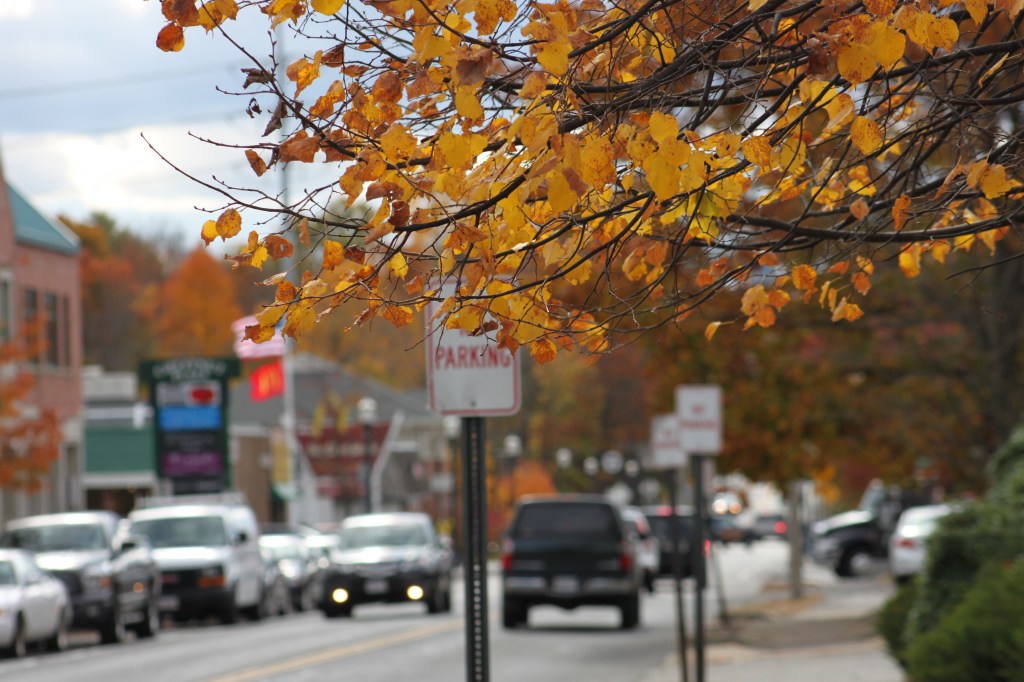


I often think about the optimism required to build this house. Families building a future in a new nation – one war ending and another looming. They were certainly thinking long-term when they laid this massive stone foundation. I think of all the generations who have shored it up since. If they were around to look in the rear view mirror, they would know that their efforts produced something lasting. (Lasting yes, requiring constant attention and upkeep, also yes). In our work in local government, I remind anyone who will listen about the important role that the rear view and the long view play in our work, in our sense of achievement, and in bolstering our resiliency.
Many of our projects are unpopular with at least one group of individuals. The effort it takes to fund even a minor project takes several years. We need to convince, cajole, and even grovel to get the project over the finish line. So the frustration is typically what we remember. I cannot count the number of times I speak to staff about a recently completed Town Meeting, and the focus is on that one item we couldn’t get funded. Or, if we got it funded, it was an exhausting battle. It is much more useful to look back and see what actually got accomplished. In most years, if we have done our homework and used our relentless practice techniques, everything that we really needed actually passed. It may sound obvious, but sometimes it isn’t. Looking back, I can see that we achieved most of our objectives, and if something remains undone, it means that we have to change our strategy and try again.

Which brings me to the Long View. Local government in our part of the country is a slow process, And I mean SLOOOOW. A construction project we are completing today took 36 months to design and construct – that is the straightforward part. The 36 months before that spent developing financing plans and convincing boards, committees, and voters that it was necessary was the complicated part. Keeping the long-term plan an explicit part of the daily conversation makes short-term setbacks easier to bear. The best way to increase resiliency is to reduce frustration.
Let’s say you think it would make sense to consolidate two departments. If the management positions in the departments are vacant, and there are no natural constituencies for the work of the departments – smooth sailing. Let’s be honest, how likely is that to happen? Instead, you may have boards and committees who are supported by the departments who will believe that there is a loss involved in the consolidation. Moreover, managers of “equal status” in an organization are unlikely to view the consolidation as a positive. Here is where the long view comes into play. Every new position, every funding decision, every vacancy should be evaluated with the long-term plan in mind. Soon enough, we are looking in the rear view mirror at a consolidated department that probably took at least three years and a lot of effort. By the time we achieve it, we often forget to congratulate ourselves and our team for making it happen.
I recently had the good fortune to attend a training session facilitated by Ron Holifield, CEO of Strategic Government Resources and a former city manager. “It’s not about me, and it’s not about now” was his mantra. How true. If we approach our long-term planning with this view in mind, we can more easily withstand the frustration that accompanies our work.
What about you? Have the rear view or long view techniques helped bolster your own resiliency or that of your staff?
Let’s practice, looking back in satisfaction and looking ahead. Way ahead. Happy Thanksgiving to all.