Time for a Clean Slate?

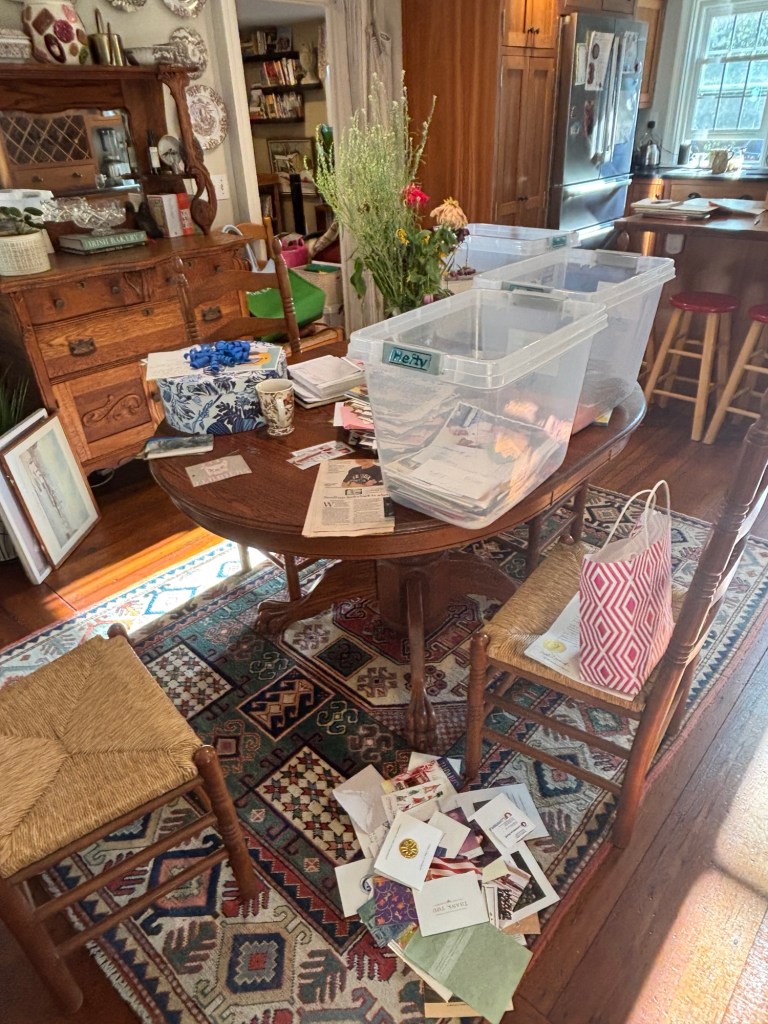
Did I save every card for 35 years? It appears so.

In her book Better Than Before, Gretchen Rubin highlights strategies for making and breaking habits. She suggests a clean slate strategy when you have the opportunity to start or stop a new habit – such as not installing all of your apps on a new phone, or taking advantage of a new commute to read more. Rubin says “There’s a magic to the beginning of anything. We want to begin right, and a good start feels auspicious…It’s a shame not to exploit the power of the Strategy of the Clean Slate when it presents itself.”

This past summer I made a major job transition and started thinking about the clean slate. I left my Town Manger role in Needham on July 4, 2025, and have started a new role as the Northeast Regional Director for the International City/County Management Association. This is a part-time, fully-remote role. In the three weeks that I had between jobs (I don’t recommend this) I quizzed everyone I met about their experience with a clean slate. Many of them mentioned starting a new job, moving to a new home, and both joyful and painful family transitions.

Concrete clean slate examples included changing from a nickname to a full name, changing email strategies like tone, inbox zero, and scheduling, not saving and filing every email, not making paper copies, avoiding emojis, setting new boundaries, and establishing closing rituals to end the workday.

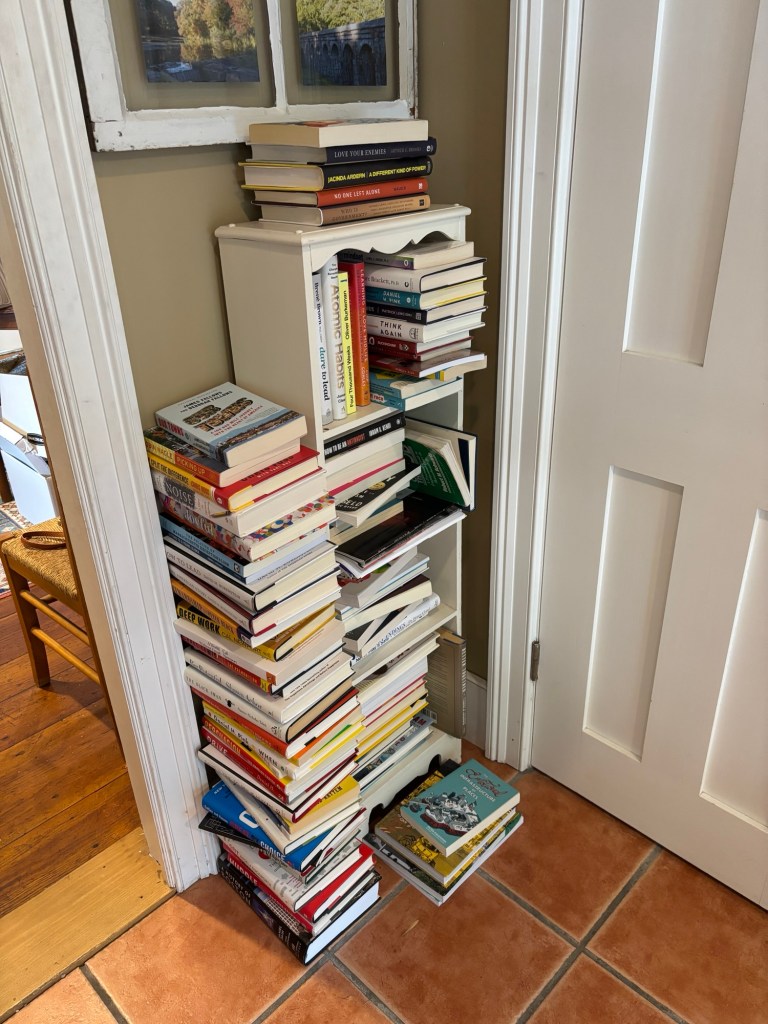
Still sorting the books that made the cut from office to home.

To my surprise, when I asked about clean slate ideas, what I heard most was people wishing they could “clean slate” workplace behaviors. To be honest (and longtime readers know how I feel about self-reflection), we have probably all exhibited some form of these at some point in our careers. Unofficial survey results indicate that people would like to see less of these traits at work:

  • Impatience
  • Complaining
  • Sarcasm
  • Gossiping
  • Defensiveness
  • Know-it-all-ing
  • Over-talking
  • Over-sharing
  • Close talking
  • Arrogance
  • Contrariness
  • Passive aggression
  • Looking at phones in meetings
  • Non-responsiveness.

So how am I doing three months into my new role? I can confidently say that I delete some emails. Typically these are the one word kind like “thanks” or “great.” Baby steps. I once had a colleague who deleted EVERY email under the assumption that she could simply search her deleted folder if she needed something. That’s one way to get to inbox zero, but it makes me break into a cold sweat. My former colleagues will be astonished to learn that I have not printed a single work document in three months. To be fair, this is mostly because personal printers are generally terrible, and my brand new one takes about a minute to print one page and runs out of ink every nine pages. Not to worry, I still have a paper calendar and notebook. I have been mindful of exclamation points in email, and I am no longer thinking about whether to send an email outside of “normal business hours” since I have no one working for me. (I do wish I had been more thoughtful about that in the past). Finally, I make it a point to look at the list of traits people dislike in leaders and colleagues – and am diligently trying to avoid them.

How about you? Do you have a memorable clean slate story? Do any of the annoying workplace traits resonate with you?

Let’s practice, taking advantage of opportunities to start fresh (or buying more notebooks and pens – after all it is autumn).

Who am I if I Only Have One Phone?

Kate Spade bag purchased because it holds two phones.

Many readers will know that I have recently retired from full-time work as a local government manager, after almost 24 years in the seat (all of them in one town). I’ve been musing a lot about who I am since I am no longer the Town Manager. I am sure to have a lot of feelings about this transition, but I have decided that the time for self-reflection is most certainly not now. The absence of my second phone, however, is a constant reminder of my altered circumstances. It’s like a phantom appendage that itches to be checked.

Local government managers have a complicated relationship with their phone(s), and we have strong opinions about phone strategies. My first phone was work-issued – I think it was a Nokia – and it had an antenna (seriously). Most people did not have personal phones in the late 1990’s, so my work phone was also my personal phone. The next phone evolution was to my beloved Blackberry. Remember those? It was sort of rounded at the bottom and had a radio/walkie-talkie feature that we only ever used for fun. But that keyboard – real keys!

In the late 2000’s we got iPhones, which were an improvement in every sense of the word – although initially we mostly used the “calling other people” feature. How quaint. The work-issued iPhone was still my personal phone until the late teens. I came back from a conference where I heard about a colleague whose phone was subpoenaed, and promptly bought a second phone. Keeping work and personal data separate became a priority for me.

As far as I can tell, there are two kinds of work cell phone users – those who cannot wait for the new technological tools that will make it easy for them to use one phone for dual purposes (you know who you are) and people like me, who would have to have the second phone pried from our clutching hands.

Very Kate, Daughter #1 and Grandson in the Fourth of July Parade – my last day in Needham. I’ve only got one phone.

How about you? Will you fight to the death to keep two phones or drop one as soon as you can?

Let’s practice, one or two phones in our hand, contemplating how to separate our selves from our titles.

My Father’s Books: Good Things Do Happen

Readers will recall that I recently lamented about giving up my father’s collection of books about the City of Boston. I couldn’t bear to put them in the book sale bin at the local library, and no one else wanted them.

A thoughtful reader referred me to Dan Dain, a lawyer who lives in the town where I work. The reader told me that Dan had recently written a book called A History of Boston (with photographer Peter Vanderwarker), and that he may be interested in taking some of the books. I contacted Dan, lugged the four boxes and one bag to my office, and invited him to take a look. Dan was happy to peruse the books. He kept pulling them out telling me what he knew about the book, or the author, or the subject. Then he uttered the best words ever: “Can I have all of them?” We couldn’t put them in his trunk fast enough.

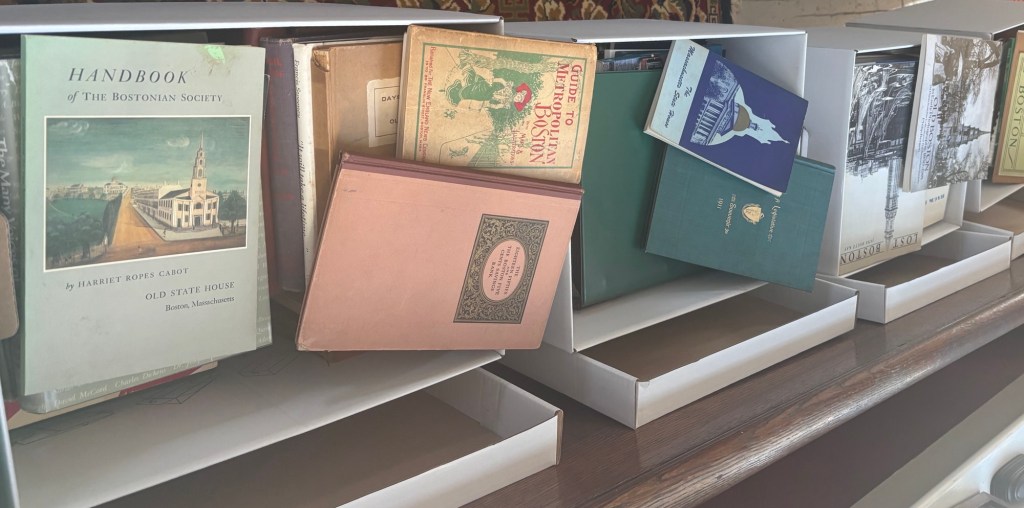
My father’s books on display at Dain Torpy

Fast forward. Dan is the founder and president of the Boston law firm Dain Torpy. He installed all of the books at the firm’s library, printed out and laminated my blog, and invited me to visit. Can you think of a happier ending?

Dan printed out my blog post to accompany the books!

How about you? Has anything amazing happened to you lately because you asked the universe for help?

Lets practice, staying connected to each other and asking for help when we need it.

My Father’s Books

The tip of the iceberg.

Both of my parents have now passed away, and it falls to the four of us siblings to find a home for innumerable collections. How could two elderly people have so many dishes? Plates? Crystal Fork Rests? Rocks? Shells? Postcards? Stamps? And most of all – books.

My youngest brother has taken on the largest share of the burden. Whenever he visits us in Massachusetts our group chat is inundated with photos of a wide assortment of items arrayed on the dining room table. “Who wants these nine cow milk pitchers? Speak now or they go to Savers tomorrow.” That kind of thing. I am fairly sentimental, so I have accumulated too many plates, statues, furniture, and – inexplicably – at least six chairs and four tables. I swear I did not ask for the ancient cane-seat chairs but my brother probably has proof that I indicated some interest.

I took no beer steins.

When my father died in 2016, my brothers estimated that there were over 10,000 books in the house. The job of getting them to the right home has also mostly fallen to the youngest. He saves them for people who might like them. He brings them to the local library, he takes them to consignment shops as a donation. When he asked about my dad’s books on Boston, I said I wanted to take a look. By the time I got home that day there were four bankers boxes on my porch. He wasn’t leaving anything to chance. Every time he comes home he finds more books about Boston.

I can’t bring myself to give them to the local library for the book sale. The City of Boston Archives and the Boston Public Library were polite but uninterested. So I decided to catalog them as a way of preserving their memory. This turned out to be a joyful project. The collection of about 160 items includes paperbacks, hardcovers, pamphlets, exhibition guides, maps, and other ephemera. For example:

  • Water Supply and Work of the Metropolitan Water District (1900)
  • Journals of the House of Representatives 1767-1768 (1949)
  • The Metamorphoses of Scollay and Bowdoin Squares (1971)
  • One Hundred Years of the Suffolk Savings Bank for Seamen and Others (1933)
  • Centenary of the See of Boston (1908)
  • The Eighteen Fifties and the Boston Five Cents Savings Bank (1926)
  • Guide to Metropolitan Boston (1899)
  • The Memorial History of Boston 1630-1880 (vol 1.) (1880)
  • Red Line Extension NW Harvard to Alewife (1978).

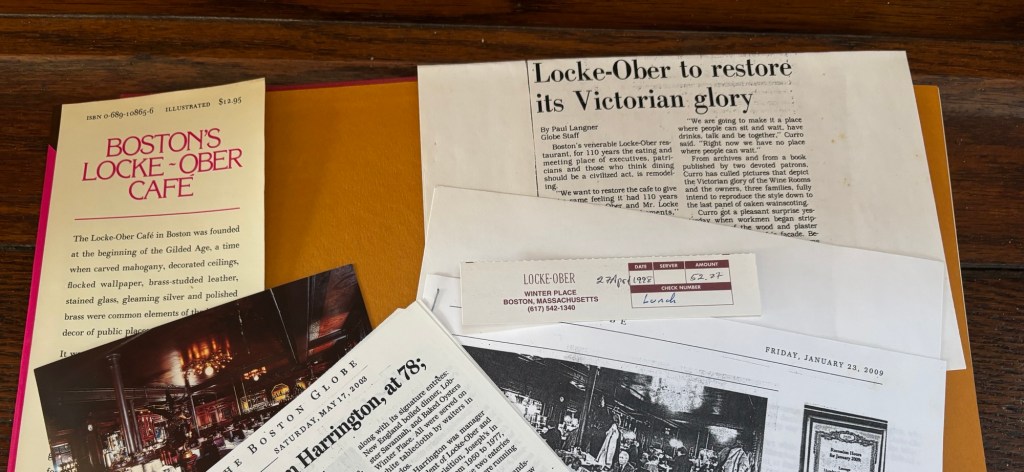
My father had a habit of saving magazine articles (often photocopied at the library) and including them in books on the same topic. My favorite example of this is a history of Locke-Ober, the posh Boston restaurant where women could not dine until 1970 (Boston’s Locke-Ober Café, 1978). Tucked inside were two news articles, a postcard, an obituary (we are Irish after all) and a receipt from a lunch he had there in 1998 ($52.27).

Isn’t this amazing?

How about you? Do you keep books? Do you tuck things in them to save? Have you ever used a crystal fork rest (i.e. what should I do with the 8 that I now have)? Have you read Bill Weld’s Mackerel at Midnight? (If not you can have my signed copy.) What advice do you have for me – is there a home for this collection?

Let’s practice – mug of tea and a copy of Boston Ways High, By, and Folk (1957) in hand.

We Live in Uncertain Times

1990’s Alarm Clock: note the reflection of trees in the backyard.

I woke up at 4:39 a.m. the other day, as one does, thinking about uncertainty. I realized that there was one thing I knew for certain – it wasn’t 4:39.

Remember during the pandemic years when everything was “unprecedented?” Well now we cannot escape “uncertainty.” Changes in the presidency always bring some level of uncertainty, and it’s fair to say that the current uncertainty quotient is quite high. For me, uncertainty is right around the corner from despair. Nadia Bolz Weber wrote recently that “(i)n the last few weeks I’ve had to actively try to avoid despair like I owe it money or something.” Same. Uncertainty I can learn to live with, despair I need to avoid.

Back to the clock. We renovated our bedroom this year – a project that has been on the list for more than a decade. We took everything out of the room, and have been judicious about what gets allowed back in. (To be honest, I’m not sure my husband knows where I put all his stuff). For some reason, even though we use our phone alarms like all other people living in this century, this clunker of an alarm clock made the cut.

We have always set the clock a bit fast in the hopes that we would actually get up on time. With daylight savings and being unplugged a few times, the clock was 39 minutes slow. Doing math involving the number 39 in the middle of the night isn’t my strong suit, so the clock is essentially useless. It does, however, remind me that there are constants in life, even if the constant is what time it isn’t.

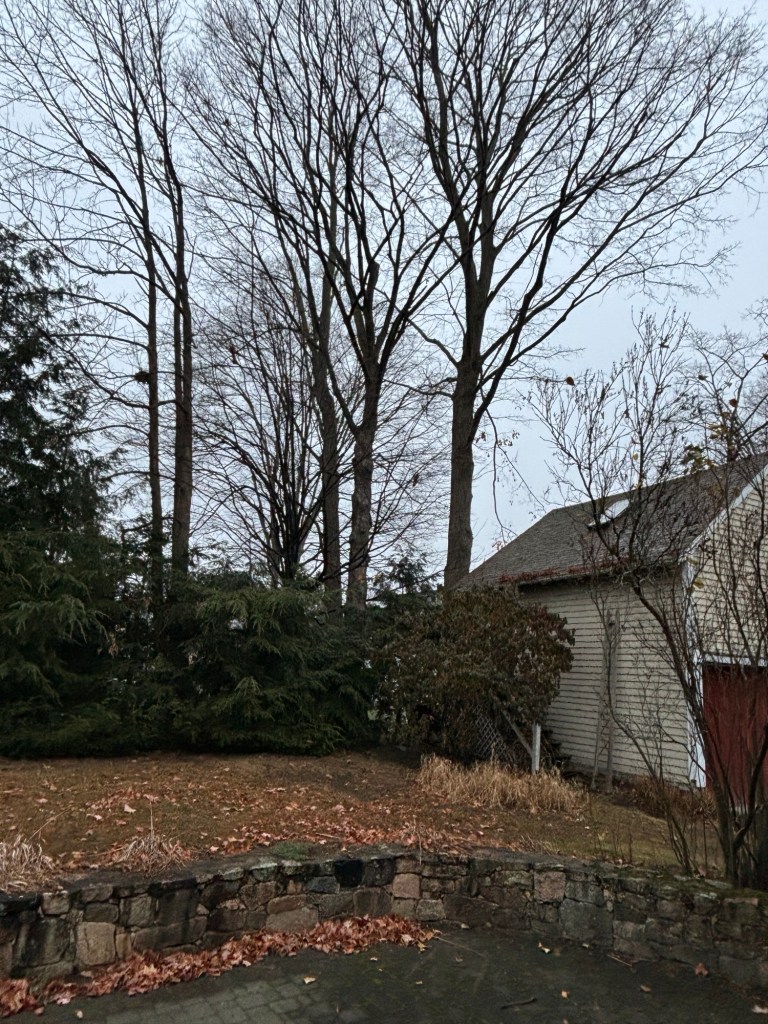
Backyard trees from a different angle

Even though I don’t need this clock, and it really is ugly, I decided to keep it as a reminder that I can live with uncertainty – another tool to fend away despair.

How about you? How are you managing uncertainty? How do you keep despair at bay? Do you still own an alarm clock?

Let’s practice doing alarm clock math. The clock is now exactly two hours slow – much easier to interpret in the night.

Musings on Local Government – UK Style

We spent some time in London and Liverpool last summer – as always I’m on the lookout for all things municipal.

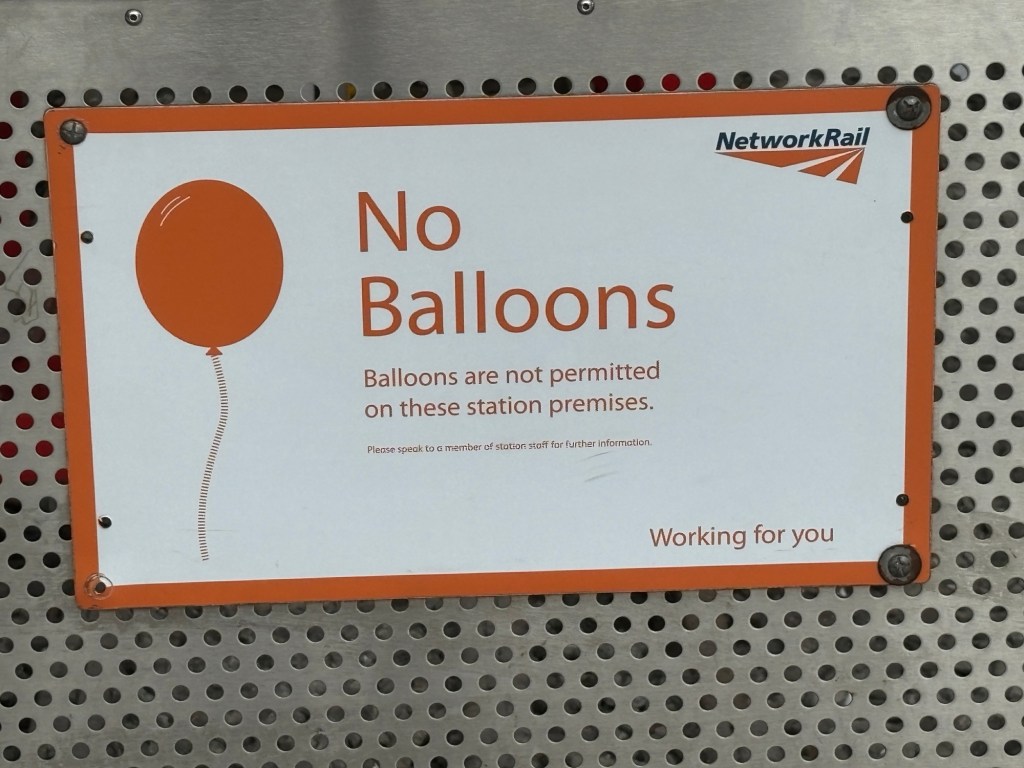
I’m pondering what must have happened to necessitate this sign.
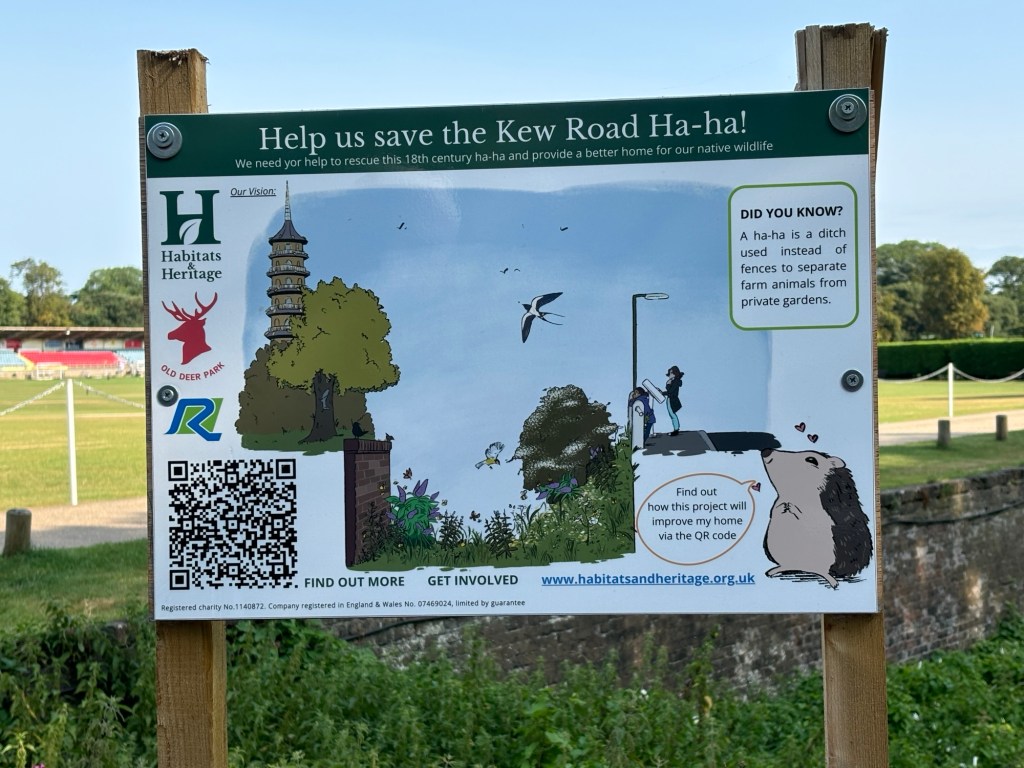
We have swales, they have “ha ha”. It’s essentially a moat.

We’ve been talking about allowing dogs at outdoor dining, but this is next level. Also, it got pretty ugly for the person in the blue shirt.
Grit: this puts our repurposed trash barrel/sand dispensers to shame.
Public art!
I would not want to have to staff this phone line in the U.S.
Heart safe efforts are also next level.

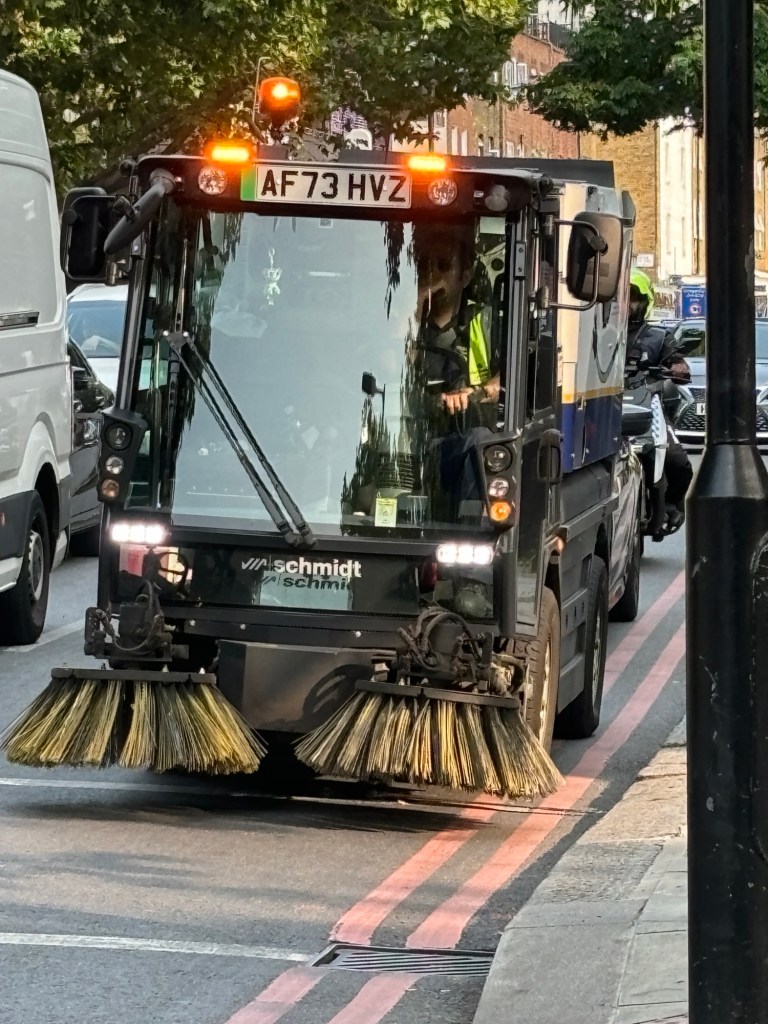
As always, our friends at public works are on the job after everyone else goes home.

How about you? Do you have a favorite or unusual municipal picture or story?

Let’s practice – watching tor examples of local government at work.

Optimism Update

If you look closely you can see the turtle a bit confused, heading toward the sign.

The tulips bloomed last Spring and the turtles hatched yesterday! It took them 88 days – just as the Internet said they would (80 – 90 is the estimate).

Actual size about 2 inches.

One of the turtles was bound and determined to get across the street, busy with school traffic. Since several of his mates had tried and didn’t make it, my neighbor carried it across. We then made an executive decision to bring the few others to a creek a few houses away.

The turtles hatched on the morning of my mother’s funeral. Not exactly the circle of life, but something.

Wishing you all the most relaxing Labor Day weekend possible.

Optimism: Tulips and Turtles

Tulips!

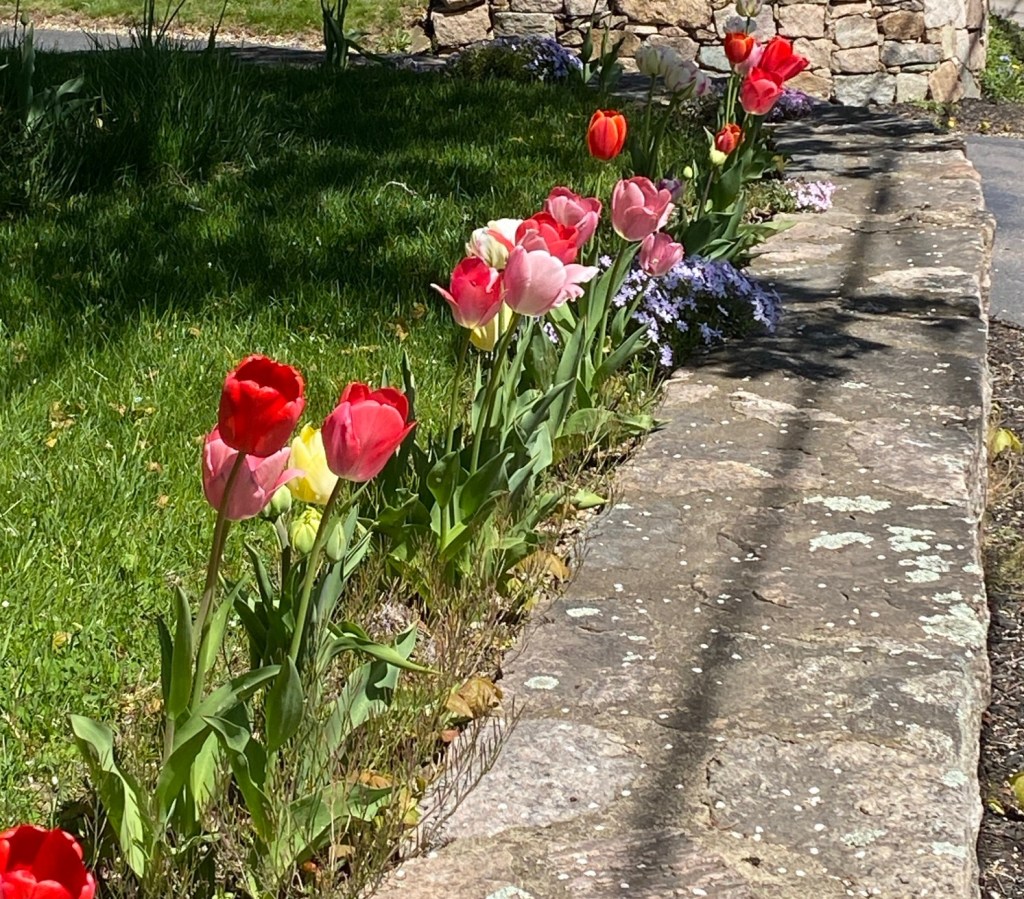
Nothing demonstrates optimism more than planting bulbs on a grey and cold November day in the hopes that flowers will emerge the next spring. Readers may recall that last year my tulips never came up, and I fretted about it for a year. But they came back this year!

Optimism – even relentless optimism – is surely my superpower. I really believe that most things can be worked out with the right amount of attention, the right team, adequate resources and time. Lack of understanding of the amount of time needed to complete a project is one of the greatest frustrations people have with local government. We like to say that everything takes 18 months, which most people not intimately involved in government simply cannot fathom. The timeframe is even longer if your great idea finds support right after the adoption of a new budget. Then 18 months quickly becomes 36.

“No one wants to follow a pessimist, but they don’t want to follow a blind optimist either,” write Jacqueline Brassey and Michael Kruvt, of McKinsey & Company (Reimagining the Post-pandemic Organization, November 2020, McKinsey.com). They identify “bounded optimism” as a way for leaders to prevent losing credibility by displaying excessive confidence. “Optimism that springs from authentic values and trust in people’s capabilities can be the source of energy for everyone in the organization to move forward. By contrast, optimism without meaning or grounding may lead to disappointment and defeat.”

Displaying relentless optimism about the future, while being mindful of bounded optimism, helps us remain positive without being unrealistic. Optimism truly keeps staff – and ourselves – motivated and engaged in the work.

Earlier this month, I came home from a long day to this text from my neighbor: “I think a giant snapping turtle is laying its eggs in front of your house :)” I’m sorry, what?

Giant Snapping Turtle on Church Street

According to the State of Connecticut’s website, snapping turtles lay their eggs in late May or early June – estimates of the “clutch” of eggs varies widely – from 20 – 80 eggs, only 5% of which typically survive. After covering the eggs, the mother returns to water, leaving the hatchlings to fend for themselves (they instinctively head to water after emerging 80-90 days later). I guess snapping turtles are optimists too. Also note, apparently turtles like to lay eggs in the same place, so we have that to look forward to.

See you next year?

How about you? What’s the most optimistic thing you have ever done? Have you seen turtles hatch?

Let’s practice being optimistic, without instilling disappointment and defeat.

Stumbling on Hope

Stumbling on Hope in Holliston, 2023

Last week I stumbled on hope.

I was walking home on a cold December night, carrying frozen dumplings. My neighbors had strung lights in their yard spelling out “HOPE.” I don’t remember them doing that before, and I don’t know why they did. But it spoke to me. 

It’s been a year for many of us. The Pandemic is over but its impact isn’t. We suffer frustration, anger, painful loss, unimaginable tragedy. Beloved friends have died, innocents are killed, and our tulips never bloomed. Neighbors, friends, and then children move away, and our parents are aging. We are weary of the negative, the hate, the blaming, the condescension, the lack of empathy.

But then we stumble on hope. And we remember that we have the capacity not just to persevere but to flourish. As we reach the end of another year, let’s recommit to experiencing more joy in 2024.

Happy Holidays from Church Street. The Amazon delivery person likes to put packages under this tree, gifted to us by a beloved neighbor who moved away earlier in the year.

We can only encounter hope and joy if we go looking. Let’s practice.

A Sample Size of One

I took statistics more than 30 years ago, but I remember enough to know that a sample size (“n”) of one has limited or no real predictive value.

VeryKate’s grandson inspecting the 300th anniversary Lego replica of the Needham Town Common. Zoom in and you will see VeryKate on the steps of Town Hall along with – inexplicably – a man in a cowboy hat.

Because I have been in this role a long time, my colleagues often tell me that what has always worked in the past cannot be expected to continue in the future. Since I am the first and only Town Manager in our community, we have no experience with transition. My colleagues say that the future can’t be predicted by a sample size of one. I’m not sure I agree, but more on that later.

Until the early 1990s, our Town structure consisted of a Select Board (actually, it was a Board of Selectmen until 2018) and an “Executive Secretary.” My predecessor was appointed to be the first Town Administrator – a position that carried more responsibility than the Executive Secretary title. I was appointed to be the Town Administrator in 2001, and in 2005, our Town transitioned to a Town Manager structure. The Town Manager has a greater role in contracting, budgeting, and staffing. So there have been two Town Administrators (a sample size of two!) and only one Town Manager here in Needham.

I was talking to a mentor a few weeks ago about the struggle I have when people don’t assume good intent in the running of our Town. He told me that there is a correlation between length of stay and ability to absorb criticism. I have to admit this is true. The fact that I have worked here most of my adult life is my choice, and I have to live with the result. (I do think assuming good intent should be our world view, but I digress).

I have never done it, but I can imagine the ease of working in a new community and not bearing the weight of 30 years of history. “Of course we can change that policy!” I would say, rather than, “Well, in 1999 we had to adopt that policy to deal with some personnel issue of a bygone era, when employers took a much more paternalistic view of employees.” It sounds heavenly.

I have been ruminating on the pros and cons of staying in the same place a long time:

  • Pro: I know a lot of people.
  • Con: People remember every mistake I made (and the many bad hair experiments).
  • Pro: I can confidently interpret the intent of a document because it is highly likely I wrote it.
  • Con: Outdated policies also bear my name.
  • Pro: I have built a team that is crushing it.
  • Con: I feel the loss of many people who have retired or passed away.
  • Pro: I have been part of the rebuilding of our Town.
  • Con: I am stuck with historical decisions, and it can be hard to make changes.

Just before the Pandemic, I was recognized by our Chamber of Commerce for 30 years of service. I was honored but hesitant – and sure enough, I got cards and flowers delivered in honor of my “retirement.” I complained about it enough that one of our family members held up this sign at the dinner.

Hand made sign intended to convey that VeryKate was not retiring – January, 2020.

Back to the sample size of one. I think that systems wear grooves into any organization, and that they last beyond one leader. They are more likely to be improved by new leaders, and the unnecessary steps will fade away. We’ll have to wait to find out – I’m not done yet.

How about you? Have you had a long tenure or multiple roles? What are your pros and cons?

Let’s practice, examining constructive feedback and using it to improve (two of my least favorite activities).